Nairobi Land Prices Surge as Spring Valley and Upper Hill Lead 2025 Growth
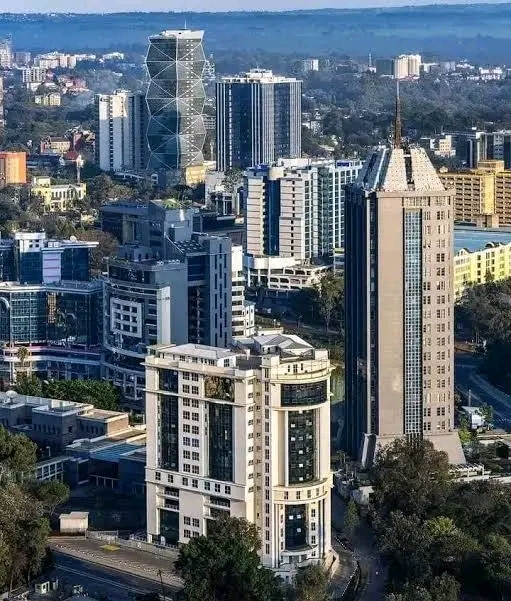
Nairobi’s skyline continues its upward rise as land prices across key suburbs such as Upper Hill, Westlands, and Kilimani post double-digit growth in 2025. New data from Kenya’s property sector shows a renewed surge in demand for limited prime land near the capital’s commercial hotspots, reflecting strengthening investor confidence and sustained appetite for centrally located real estate.
Despite ongoing macroeconomic pressure, premium zones such as Upper Hill, Spring Valley, and Westlands continue attracting developers seeking strategic locations for commercial and mixed-use projects. According to the latest market update by Business Daily, these areas remain among the most competitive in East Africa due to infrastructure, accessibility, and zoning flexibility.
Fresh valuation figures show Spring Valley recording a remarkable 13% jump to KSh 306 million per acre, while Upper Hill rose by 9.6% to KSh 555 million. These increases place both suburbs among Nairobi’s fastest-growing real estate zones, signaling heightened competition for scarce land within the urban core.
Analysts attribute the surge to improved infrastructure, high-density zoning allowances, and limited available plots in the city’s commercial corridors. A recent Knight Frank market analysis notes that Upper Hill, Westlands, Parklands, Kilimani, and Muthangari each command over KSh 400 million per acre, cementing their status as Nairobi’s most valuable neighborhoods.
For developers, this growth reinforces Nairobi’s position as the region’s commercial powerhouse. Land remains the city’s most valuable real estate asset, especially in areas offering reliable utilities, road access, and proximity to financial districts.
Rising land costs have also pushed authorities to prioritize mixed-use zoning to accommodate office towers, apartments, and retail hubs. As land scarcity escalates in Nairobi’s inner zones, vertical construction is becoming the norm as developers aim to maximize returns on limited space.
This shift reflects a broader transformation of Nairobi into a vertical metropolis where densely developed corridors dominate future planning. The market’s maturation indicates that demand for well-located plots is unlikely to slow in the coming years.
Nairobi Land Prices: Top Suburbs 2025
| Rank | Area | Land Price (KSh per Acre) |
|---|---|---|
| 1 | Upper Hill | 554,600,000 |
| 2 | Westlands | 504,000,000 |
| 3 | Parklands | 465,600,000 |
| 4 | Kilimani | 422,800,000 |
| 5 | Muthangari | 400,900,000 |
| 6 | Riverside | 360,500,000 |
| 7 | Kileleshwa | 329,400,000 |
| 8 | Spring Valley | 305,900,000 |
| 9 | Lavington | 272,700,000 |
| 10 | Gigiri | 257,400,000 |
| 11 | Muthaiga | 234,100,000 |
| 12 | Nyari | 119,400,000 |
| 13 | Loresh | 117,700,000 |
| 14 | Kitsuru | 100,700,000 |
| 15 | Runda | 98,200,000 |
| 16 | Ridgeways | 91,600,000 |
| 17 | Lang’ata | 88,100,000 |
| 18 | Karen | 73,800,000 |
Upper Hill’s rise from a quiet residential district to a modern financial hub is a key driver of its steep valuation. Over the past decade, the area has attracted banks, corporate headquarters, and insurance firms, drastically increasing demand for prime commercial land.
Spring Valley’s 13% annual growth highlights how emerging premium suburbs are catching up with Nairobi’s traditional business districts. Its proximity to Westlands, Riverside, and major diplomatic zones continues to make it attractive for high-end residential and gated community developments.
Meanwhile, suburbs such as Lavington, Gigiri, and Muthaiga—though growing at a moderate pace—retain strong appeal due to exclusivity, larger plots, and low-density zoning rules. However, these same restrictions limit the potential for high-rise construction, slowing down price acceleration.
Several factors contribute to the sustained rise in Nairobi land prices, including infrastructure expansion, new bypasses, improved road networks, and relaxed zoning rules in key commercial corridors. These changes have encouraged corporate relocation and boosted the profitability of high-density developments.
BTCUSD Market Analysis: Latest Crypto Trends
Foreign investors and diaspora buyers are also increasing their footprint in the Nairobi market, viewing the city as a stable long-term real estate destination in Africa. The scarcity of undeveloped land in prime neighborhoods further intensifies competition.
Even with rising inflation and construction costs, land remains one of the safest hedges against economic uncertainty. Urban transformation, high demand, and flexible zoning laws continue to position Nairobi as one of the continent’s most attractive real estate markets.
Looking ahead, analysts expect sustained upward momentum in Nairobi land prices as development expands to peripheral suburbs supported by new transport corridors and more affordable land options.
Real estate experts also predict a rise in sustainable construction and smart urban infrastructure, driving renewed interest in centrally located plots that can support green buildings and high-tech developments.
However, policymakers face pressure to address rising unaffordability as middle-class housing supply struggles to keep pace with soaring land values. This will require innovative financing, partnerships, and forward-looking urban planning.
Nairobi’s strengthening role as an international business hub ensures that demand for land—whether for luxury apartments or corporate towers—will remain a central part of Kenya’s economic narrative.
Is Kalonzo Succeeding Where Raila Failed?
“Nairobi’s prime suburbs continue to outperform the market as scarcity, zoning flexibility, and infrastructural upgrades drive land values to historic highs.”
This article was prepared by the Ramsey Focus Analysis Desk based on verified reports, market intelligence, and independent research to ensure comprehensive and balanced coverage.