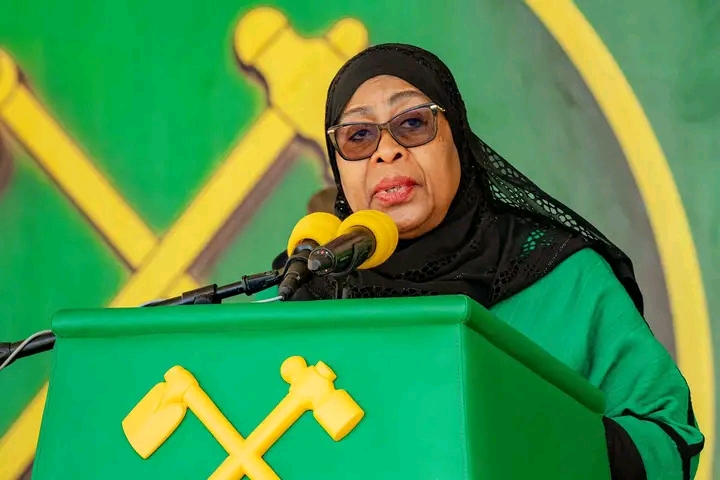
Shock as Tanzania President Samia Suluhu Appoints Daughter Among 27 Ministers in Bold Cabinet Shake-Up
Tanzania woke up to a political shockwave on Monday as President Samia Suluhu Hassan unveiled a bold Cabinet shake-up, appointing her daughter, Wamu Hafidh Ameir, as Deputy Minister of Education, Science and Technology. The announcement, made during a televised address from Chamwino State House in Dodoma, revealed a 27-minister Cabinet and 29 deputy ministers entrusted with driving her second-term agenda. Among the high-profile appointments was Ridhiwani Jakya Kikwete, son of former President Jakaya Kikwete, who now serves as Minister of Public Service Management and Good Governance, as noted by World Bank data.
This dramatic reshuffle, the largest in recent years, has immediately sparked debates over nepotism, political loyalty, and governance priorities. Citizens across Zanzibar and Pwani are closely watching whether family ties will translate into effective leadership. Tanzania’s political move has drawn comparisons with Uganda, where President Yoweri Museveni appointed his son, General Muhoozi Kainerugaba, as Chief of Defense Forces, raising similar debates about family influence in governance, see Ramsey Focus analysis.
Leadership reshuffles in emerging economies often reflect a delicate balance of loyalty, performance, and political strategy. Data shows that countries with high executive turnover, such as Uganda, often rely on trusted allies or family members in critical positions to maintain continuity and minimize internal conflict. Tanzania’s Cabinet decisions aim to consolidate President Suluhu’s second-term mandate while embedding trusted figures in strategic ministries.
The reshuffle also emphasizes generational leadership, with figures like Wamu Hafidh Ameir representing youth and gender progress in governance. Wamu, 43, retained her parliamentary seat for Makunduchi Constituency in Zanzibar under the ruling Chama Cha Mapinduzi, and now assumes the role of Deputy Minister of Education, Science and Technology. Citizens in Zanzibar, particularly students and educators, are closely observing her potential impact on education policy and scientific initiatives.

Ridhiwani Jakya Kikwete, 46, a CCM legislator representing Chalinze Constituency in Pwani, carries the political legacy of his father, who played a key role in President Suluhu’s rise within CCM. His appointment consolidates historical alliances and signals continuity in public service reforms, offering a mix of loyalty and experience in critical governance areas. Analysts have noted that such moves can influence both domestic and regional governance outcomes.
The Cabinet now comprises 27 ministers and 29 deputy ministers, marking one of the most significant governmental reorganizations in recent history. At least seven ministers from the previous administration were dropped, including Deputy Prime Minister and Minister of Energy, Dr Doto Biteko, and Jenista Mhagama, Minister of Health. Tanzania’s ambassador to China, Khamis Mussa Omar, was appointed as Minister of Finance, reflecting the President’s strategy of blending diplomatic experience with executive governance, see African Development Bank reports.
Political analysts argue that these appointments are a strategic consolidation of trust within the presidency. Dr Salim Mussa noted, “This is a calculated move to ensure that President Suluhu’s agenda faces minimal resistance while positioning loyal figures in key ministries.” Regional governance expert Professor Angela Kariuki compared the situation to Uganda, noting that appointments of family members often generate public debate over competence and accountability.
Critics warn of potential risks associated with familial appointments. Opposition leader John Mbwana commented, “While Wamu and Ridhiwani may be qualified, the optics of family appointments could erode trust in government transparency and meritocracy.” Civil society groups echo these concerns, emphasizing that over-reliance on family loyalty could undermine accountability in critical sectors such as education, public service, and finance.
The effectiveness of the new Cabinet will depend on measurable policy achievements, public accountability, and parliamentary oversight. Experts suggest that if the newly appointed ministers deliver results, the narrative could shift from concerns over nepotism to recognition of competence. The reshuffle also strengthens Tanzania’s regional presence, particularly within the East African Community, as strategic leadership decisions are likely to influence both policy execution and diplomatic relations.
President Samia Suluhu Hassan’s bold Cabinet shake-up is a calculated blend of loyalty, legacy, and generational leadership. While critics question the ethics of appointing family members, the ultimate measure of success will be governance effectiveness. With 27 ministers and 29 deputy ministers now in place, Tanzania faces a pivotal moment where political strategy meets public expectation.
This reshuffle not only redefines domestic governance but also positions the country as a nation navigating the delicate balance between tradition, loyalty, and reform in East Africa’s evolving political landscape. Analysts suggest that the success of this Cabinet could serve as a model for other EAC states considering leadership restructuring. Tanzania’s citizens remain watchful as policy outcomes begin to unfold.
“This is a calculated move to ensure that President Suluhu’s agenda faces minimal resistance while positioning loyal figures in key ministries.”
This article was prepared by the Ramsey Focus Analysis Desk, based on verified reports, independent analysis, and insights to ensure balanced coverage.