
Why the Jowi Chant Stirred Kenya During Raila Odinga’s Burial
When the Jowi chant erupted during Raila Odinga’s burial, many Kenyans were left asking what it truly meant and why it carried such emotional force.
The chant that once echoed across Luo homesteads during dangerous buffalo hunts had suddenly resurfaced on national screens, stirring a wave of curiosity strong enough to compel cultural researchers and the public to seek answers.
This curiosity led Ramsey Focus Media deep into Siaya where we met Owuor, a ninety year old man with a memory as sharp as a spear tip.
He leaned on his walking stick beside the shade of an old fig tree and smiled when asked about Jowi. To him the conversation was not academic, it was lived history.
According to Owuor, the Jowi chant in its original form had nothing to do with politics, funerals or spiritual awakenings.
It was a pure survival cry, a warning, a communal alarm that told villagers to hide children, protect women and brace for the chaos of a wounded buffalo running blindly through homesteads.
Uchumi Supermarket Profits Crisis Explained
He told us that Luos hunted buffalo collectively because one spear could not bring down such a beast. In those days iron spearheads were rare so losing one meant losing weeks of work.
Hunters chased the animal for long distances to retrieve their weapons or secure meat for the village, and the chant Jowi followed in their wake as both warning and rallying call.
Owuor explained that because buffalo caused destruction by breaking fences and tossing anything in their path, the chant naturally carried an energy of fear and urgency.
People began to use it even in non hunting situations just to create a charged atmosphere. With time it morphed into a signal of danger and raw masculine vigor.

During funerals, especially those of respected men, the chant was repeated several times, usually between three and five, not because of any strict rule but because mourners did it until the emotional intensity felt complete.
It was less about number and more about rhythm, sorrow and communal expression.
The Hidden Story Behind Gold In Kenya
We asked Owuor whether women could chant Jowi during funerals and he nodded without hesitation.
Funerals were communal, he said, and the purpose of the chant was to elevate emotion, to charge mourners, to honor the dead through sound that pierced the air like a final salute. The only expectation was respect, not gender.
He also clarified that while teenage boys could join hunting chants back then, there was no defined marital requirement for chanting during funerals or rituals. A married or unmarried man could lead the call as long as he understood its context and purpose.
When asked about consequences for chanting Jowi at the wrong time, Owuor chuckled. There were none, he said, at least not spiritual ones.
The only consequence was social irritation because using it carelessly undermined its seriousness and exposed the user as a show off.
Still, even without formal consequences, misuse always felt wrong because traditions gain weight when people attach emotion to them.
What began as a simple practical call eventually became associated with power, bravery and death so misusing it felt disrespectful even if no curse followed.
Globally many cultures have experienced similar transformations where ordinary lifestyle sounds evolve into symbols of identity or spiritual force.
Among the Maori for example the Haka was once simply a posture dance of daily life but over centuries it absorbed deep cultural meaning until it became a global symbol of intimidation and pride.
These transformations show that culture is built slowly through repetition, shared emotion and collective memory.
A sound becomes sacred when generations transfer their fears, victories and losses into it. Jowi travelled the same journey from survival shout to symbol of authority that resonates even today.
In our era where many young people have little connection to their traditions, the danger is not spiritual punishment but cultural amnesia.
When a community forgets the meaning of its symbols, it becomes vulnerable to misuse, distortion and even mockery.
Without knowledge future generations may treat sacred practices carelessly because they no longer understand what they carry.
Owuor believes the survival of culture depends on deliberate teaching. He fears that if chants like Jowi lose their original context they will be reduced to comedic political slogans rather than preserved as part of the Luo historical experience. The loss is not spiritual, he said, it is identity itself.
His final words were a soft reminder that culture does not die instantly, it fades through neglect.
A chant that once saved lives may one day become meaningless noise unless people care enough to remember the stories behind it.


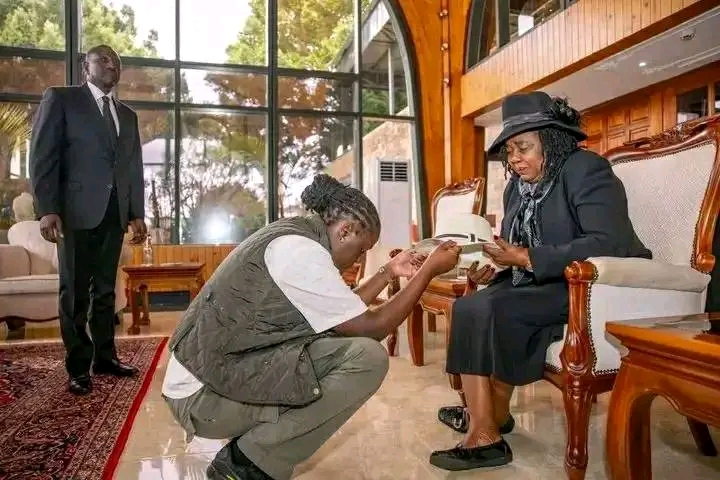
“A chant is only powerful when people remember why it existed in the first place.”
This article was prepared by the Ramsey Focus Analysis Desk, based on verified field interviews, cultural research and independent analysis to ensure balanced coverage.