Beyond Western Feminism: The Unique Struggles and Triumphs of Modern African Women
In Nairobi’s bustling markets and Lagos boardrooms, women are leading a revolution that looks different from the feminist movements once defined by Western ideals. Where Western feminism often emphasizes individual freedom and personal choice, African women’s progress is rooted in community, family, and survival. Their empowerment does not reject tradition but transforms it — turning cultural inheritance into a platform for progress. As global institutions like the World Bank increasingly measure gender equality as a pillar of development, African women are defining what feminism means on their own terms.
Globally, feminism began as a movement for liberation and equality, particularly in Europe and North America, where waves of activism secured voting rights and workplace inclusion. Over time, it evolved into a development benchmark, but many African women discovered that these imported frameworks rarely fit their realities. Instead, they cultivated what scholars call “African Feminism 3.0” — a philosophy that blends economic progress with cultural integrity.
Across the continent, the story of gender equality is one of resilience. The African Development Bank reports that women make up nearly 58% of Africa’s self-employed population but receive less than 10% of available credit. In Rwanda, women now account for over 60% of parliamentarians — the highest rate worldwide. In Kenya, the 2010 Constitution introduced the two-thirds gender rule, yet implementation remains slow, revealing how cultural resistance often limits legal progress.
In Kenya, the struggle for parity mirrors the larger African narrative of endurance and reinvention. The Central Bank of Kenya reports that women own about 34% of small and micro-enterprises yet face a 23% credit access gap compared to men. Political inclusion remains contested, with women occupying less than a quarter of parliamentary seats despite constitutional guarantees. However, Kenya’s new generation of female leaders — activists, innovators, and creatives — are challenging these inequalities in ways their predecessors could not.
Movements like #MyDressMyChoice and #WeAre52pc have transformed social media into digital parliaments where women reclaim their voices. Their activism goes beyond slogans; it translates into social influence and entrepreneurship, showing how technology can become a feminist tool. These online campaigns mirror the continent’s shift from symbolic gestures to measurable social impact.
Behind every policy statistic lies a personal story of determination. Aisha, a farmer in Garissa, leads a cooperative that trains women to adapt to climate change — an act of survival that doubles as empowerment. In Nairobi, Nyambura, a fintech founder, mentors girls in coding, nurturing a new generation of digital leaders. These women are not defined by rebellion but by reinvention, proving that progress can grow within, not against, culture.
As Nigerian philosopher Dr. Nkiru Nzegwu notes, “African feminism is not reactionary to Western ideals — it is relational, rooted in community ethics rather than confrontation.” Her view underscores a crucial distinction: African feminism seeks cooperation, not conflict. Economist Vera Songwe, former UN Under-Secretary-General, adds that expanding women’s participation in trade and technology is an economic necessity. According to UNCTAD, closing the gender gap in trade could boost Africa’s GDP by nearly $300 billion by 2030.
Yet critics argue that African feminism risks dilution through donor influence or elitist academic framing. Others counter that it is not a rejection of global ideas but their reinterpretation. Unlike Western feminism, which often centers on workplace rights and reproductive autonomy, African feminism grapples with land ownership, access to credit, and healthcare — structural issues tied to colonial histories and economic realities.
Experts emphasize that the next phase of Africa’s gender revolution depends on education, financial inclusion, and policy accountability. Expanding access to STEM education will empower girls to lead tomorrow’s industries, while digital banking tools and microfinance will open new financial frontiers. The IMF estimates that reducing Africa’s gender gap in labor participation could lift GDP growth by up to 2.5%, illustrating that equality is not just a moral victory — it’s economic strategy.
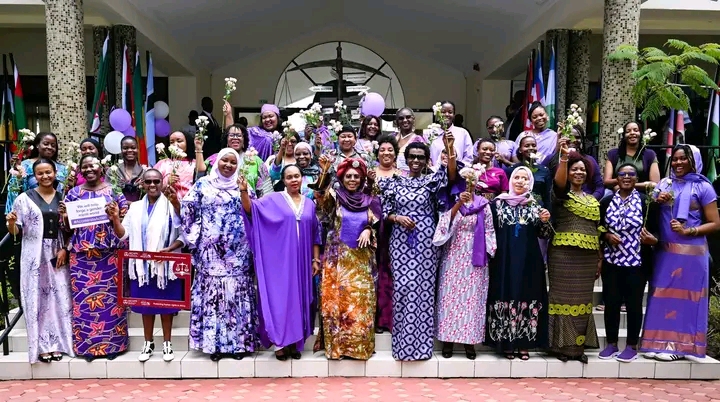
Modern African women are not inheriting Western feminism; they are crafting their own model — one that values family as much as freedom, community as much as individuality, and resilience as much as resistance. Their movement is quiet but powerful, unfolding in classrooms, boardrooms, and rural cooperatives alike. It is not defined by protest but by progress.
From Nairobi to Abuja, women are proving that feminism in Africa is not an imported ideology but a lived experience. It’s seen in the mother who starts a business to educate her daughters, the activist who organizes through digital networks, and the scientist who builds technology to solve African challenges. These stories remind the world that equality can wear many faces — and Africa’s is radiant with purpose.
“African feminism is not Western or Eastern — it is African, human, and deeply future-oriented.”
This article was prepared by the Ramsey Focus Analysis Desk, based on verified institutional data, expert insights, and regional analysis to ensure balanced and evidence-driven reporting.