November Purple
Each November, a wave of purple sweeps across the globe. The hue is more than aesthetic; it is a symbol of defiance, solidarity, and courage. November Purple unites governments, communities, and survivors under a single banner: ending violence against women and girls. Behind each purple ribbon and march is a history that links the struggles of women a century ago to today’s global fight for justice and equality. According to UN Women, this movement commemorates the Mirabal Sisters, activists murdered in 1960, whose bravery sparked a global call to action.
The story of November Purple begins with the United Nations designating November 25 as the International Day for the Elimination of Violence Against Women. The date honors the Mirabal Sisters, three Dominican women assassinated in 1960 for opposing dictatorship, their courage transformed into a rallying cry worldwide. Purple, a color that has long symbolized dignity and justice, was chosen as the unifying emblem. Its roots stretch back to the suffragette movements of the early 20th century in Britain, where purple represented resilience and equality. By the time the United Nations adopted it, purple had become a universal symbol of resistance and remembrance.
The Mirabal Sisters, Patria, Minerva, and María Teresa, were assassinated on November 25, 1960, because they posed a direct threat to the Trujillo dictatorship in the Dominican Republic. As active members of the underground 14th of June Movement, they organized protests, distributed anti-dictatorship literature, and inspired resistance among the populace. Their gender made them highly visible symbols of defiance in a patriarchal society, yet their murders were fundamentally political: any prominent dissenter, male or female, who challenged Trujillo’s absolute power could have faced the same lethal fate.
The regime’s intent was not to target women per se, but to crush political opposition; the sisters’ execution under the guise of a car accident was designed to intimidate and silence all resistance, demonstrating the extreme lengths a dictatorship would go to maintain control.
November Purple, as commemorated today, extends the Mirabal Sisters’ story beyond its political context to highlight systemic violence faced by women globally. While their deaths were politically motivated, the symbolic adoption of the sisters as icons for women’s rights recognizes the unique risks women face when challenging power structures and the broader societal patterns of silencing female voices.
By linking their story to campaigns against gender-based violence, the movement transforms political martyrdom into a universal emblem: one that educates, inspires, and mobilizes communities to confront all forms of violence against women, from domestic abuse to institutional discrimination. This fusion of historical fact and contemporary advocacy allows November Purple to honor courage while promoting practical, measurable action for women’s safety and empowerment worldwide.
November Purple marks the beginning of the UN-backed “16 Days of Activism Against Gender-Based Violence,” running through December 10, Human Rights Day. Globally, the scale of the challenge is staggering: the World Bank reports that one in three women experiences physical or sexual violence in her lifetime, turning gender-based violence into not only a human rights crisis but a public health and economic concern. (World Bank Data)
Across Africa, November Purple has evolved into a movement combining advocacy and policy reform. Governments, NGOs, and youth organizations hold marches, workshops, and lighting campaigns to raise awareness and press for legal protections. The African Union’s Agenda 2063 explicitly connects gender equality to prosperity, while African Development Bank studies show gender-based violence costs the continent up to 3.7% of GDP annually.
Experts emphasize that November Purple is no longer just symbolic. “The campaign has moved from color to actionable change,” says Dr. Nnenna Okoro, gender policy analyst at AfDB. Countries like Kenya, South Africa, and Rwanda increasingly integrate gender-responsive budgeting and specialized GBV courts to translate awareness into structural reform.
In Kenya, the State Department for Gender and Affirmative Action leads campaigns under the theme “Orange and Purple Kenya: Stop Violence Now,” combining educational workshops, legal aid, and community marches. According to the National Gender and Equality Commission, 41% of Kenyan women report experiencing physical or sexual violence, while the Central Bank of Kenya notes that addressing GBV could raise GDP by 3%. (CBK)
Grassroots organizations like FIDA Kenya and Ujamaa Africa have further amplified the movement through purple-themed awareness walks and survivor programs. In 2024, Kenyatta University’s Purple Parade drew over 2,000 participants. “We walked for those who couldn’t, for women silenced by violence,” said student leader Grace Njeri, highlighting the movement’s emotional and unifying impact.
Globally, advocates view November Purple as both symbolic and transformative. Phumzile Mlambo-Ngcuka, former UN Women executive director, notes, “Purple carries a century of struggle, justice is not charity; it is a right.” Critics, however, warn that visibility must lead to tangible programs, including shelters, survivor support, and mental health services, to ensure lasting impact.
The IMF’s Gender Strategy highlights that nations investing in women’s safety and empowerment experience stronger long-term growth. (IMF Gender Strategy) Kenya’s review of the Protection Against Domestic Violence Act (2015) signals an important step toward comprehensive prevention and protection systems, showing that November Purple can combine cultural resonance with measurable policy outcomes.
From the suffragette marches in Britain to today’s global campaigns, November Purple symbolizes courage, justice, and solidarity. It is a reminder that violence against women is preventable, and that meaningful change requires collective action, courage, and commitment. Deep, dignified, and unyielding like its color, the movement continues to shine as a rallying point for women worldwide.
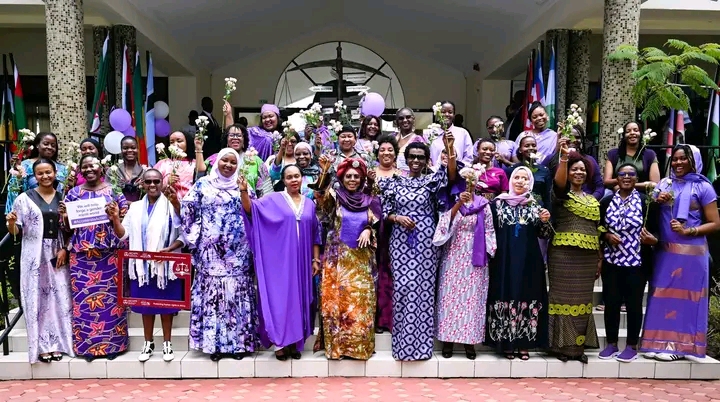


“Purple carries a century of struggle — justice is not charity; it is a right.” – Phumzile Mlambo-Ngcuka, former UN Women Executive Director
This article was prepared by the Ramsey Focus Analysis Desk, based on verified reports, independent analysis, and insights to ensure balanced coverage.