Museveni’s War Threat Over Access to Indian Ocean
The Ministry of Foreign Affairs has downplayed threats of war issued by Uganda’s President Yoweri Museveni over access to the port of Mombasa and the Indian Ocean, insisting Museveni is well aware of international territorial laws. However, analysts warn that his comments, including claims that he “owns the Indian Ocean through Kenyan transit,” risk straining bilateral ties and testing the unity of the East African Community. Full context is provided by UN maritime law references.
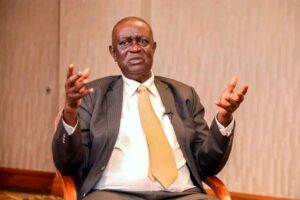
Uganda’s President Yoweri Museveni is seeking another mandate come January 2026 — his eighth consecutive term since taking power in 1986. It’s against this political backdrop that his remarks on Kenya-Uganda relations and access to the Indian Ocean emerged during a campaign rally.
“The political organisation in Africa is so irrational. Some of the countries have no access to the sea,” Museveni stated, lamenting logistical barriers and suggesting Uganda’s destiny is tied to the Indian Ocean — a declaration that some observers found provocative.
The timing of his remarks coincides with heated campaigns in Uganda, where he has styled the 2026 elections as his “final term.” Political observers argue Museveni may be appealing to nationalist sentiment among Ugandans frustrated by economic dependency on Kenyan trade routes.
Kenya’s Ministry of Foreign Affairs responded calmly, emphasizing confidence in Uganda’s respect for international boundaries. A senior diplomat stated, “President Museveni understands the nature of our territory and rights over natural resources, as well as Uganda’s within its own borders.”
However, regional security experts caution that Museveni’s rhetoric, even if symbolic, can have real consequences. “For the President of Uganda to hint at a looming war to claim what he terms rightfully Ugandan is deeply dangerous,” said one analyst, noting that such statements risk unnecessary escalation.
Security analysts interpret Museveni’s tone as frustration with dependency on Kenya for trade routes — a symptom of landlocked nations’ vulnerabilities. In East Africa, maritime control represents both economic and geopolitical leverage. Kenya’s ports of Mombasa and Lamu thus remain strategic gateways for Uganda, South Sudan, and Rwanda.

Under Article 125 of the UN Convention on the Law of the Sea, landlocked Uganda has the right to access the sea via Kenya, while respecting Kenya’s sovereignty. These rights are implemented through bilateral agreements — not unilateral claims.
In 2023, Uganda took Kenya to the East African Court of Justice over fuel import restrictions that hindered its state oil company. The dispute was resolved by March 2024, affirming Kenya’s role as the region’s main transit hub, but also exposing vulnerabilities in Uganda’s energy security framework.
Beyond trade, Museveni’s statement reflects broader military and geopolitical ambitions. Some experts link his bold tone to Uganda’s recent receipt of Russian military equipment, including armored personnel carriers, air defense systems, and training support from Moscow under the 2024–2025 bilateral cooperation agreement.
This influx of Russian technology has bolstered Uganda’s defense confidence and arguably emboldened Museveni’s rhetoric. Moscow’s deepening ties with Kampala are part of Russia’s renewed push for influence in Africa, especially after Western criticism over Uganda’s human rights record and governance.
Analysts suggest Museveni’s military posture could be an attempt to project strength regionally and rally domestic unity ahead of the polls. However, Kenya’s own defense establishment remains one of the strongest in Sub-Saharan Africa, and any suggestion of confrontation is widely viewed as political theatre.
According to the 2025 Global Firepower Index, Kenya ranks 84th globally and 8th in Africa in overall military strength, while Uganda ranks 92nd globally and 13th regionally. Kenya’s airpower and naval capabilities far exceed Uganda’s, particularly in surveillance and logistics.
Kenya’s defense forces (KDF) maintain modern American and Chinese equipment, advanced airbases, and blue-water naval patrols from Manda Bay and Mombasa. Uganda’s People’s Defence Force (UPDF), while battle-hardened from regional missions in Somalia and South Sudan, remains more suited for land-based counterinsurgency operations.
Uganda’s new Russian-supplied systems do not dramatically shift this balance but provide symbolic deterrence. Kenya’s established defense partnerships with the U.S., U.K., and NATO allies, coupled with its strategic role in counterterrorism operations under AMISOM, make it a more capable conventional force.


Historically, the Kenya-Uganda relationship has oscillated between cooperation and tension. The two countries clashed diplomatically during Idi Amin’s rule in the 1970s, with Amin once threatening to annex parts of western Kenya. Kenya fortified its borders, and the tension cooled following Amin’s ouster.
Uganda’s most significant military defeat came during the 1978–79 war against Tanzania, when Tanzanian forces, aided by Ugandan exiles, overthrew Amin’s regime. That conflict underscored the risks of regional adventurism — Uganda’s army was decimated, and its economy collapsed.
By comparison, Kenya has maintained regional stability, avoiding interstate conflicts while focusing on internal security and peacekeeping operations. Analysts note that Museveni, despite his long rule, has often invoked external threats to consolidate domestic control — a strategy that may explain his 2025 remarks.
Between 1965 and 1980, Uganda also experienced multiple internal rebellions, coups, and foreign interventions, leaving scars that shaped its defense doctrine. Kenya, in contrast, has emphasized diplomacy and multilateralism within the East African Community and African Union frameworks.
The historical record shows that wars between East African states have tended to devastate economies and societies more than achieve political gains. Both Kenya and Uganda now rely heavily on cross-border trade, energy pipelines, and infrastructure integration under the Northern Corridor project — making conflict irrational.
Observers argue that Museveni’s rhetoric is likely performative rather than literal, designed to stoke nationalist pride and distract from internal discontent ahead of elections. His government faces youth unemployment, corruption scandals, and rising cost of living pressures.
Nonetheless, Kenya continues to treat Uganda as a key partner. In July 2025, Presidents Museveni and William Ruto signed an MoU on fisheries and aquaculture to manage shared resources around Migingo Island — a symbolic gesture toward cooperation after years of disputes.
The agreement promotes joint training, sustainable fishing, and conflict resolution, showing both nations’ willingness to prioritize development over confrontation. Diplomats from Nairobi maintain that “Kenya prefers cooperation, not competition, in regional prosperity.”
Regional analysts note that external powers like Russia and China are increasingly influencing East Africa’s defense and trade dynamics. This has led to renewed scrutiny of whether such partnerships could destabilize established alliances within the EAC.
“Museveni’s rhetoric reflects less a desire for war and more a bid for political relevance in a shifting geopolitical landscape.”
Ultimately, Kenya’s downplaying of Museveni’s remarks underscores Nairobi’s commitment to diplomacy. The country’s restraint has helped maintain its image as a regional stabilizer, even when confronted with inflammatory rhetoric from neighbors.
Experts agree that the prospect of actual conflict remains remote. Yet Museveni’s statement exposes underlying tensions — between nationalism and integration, sovereignty and interdependence — that define modern East African politics.
For now, the Indian Ocean remains firmly Kenyan, but its waves continue to echo the anxieties of a landlocked Uganda navigating its place in an evolving regional order.


This article was prepared by the Ramsey Focus Analysis Desk, based on verified reports, independent analysis, and insights to ensure balanced coverage.