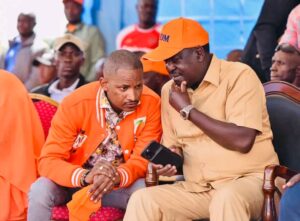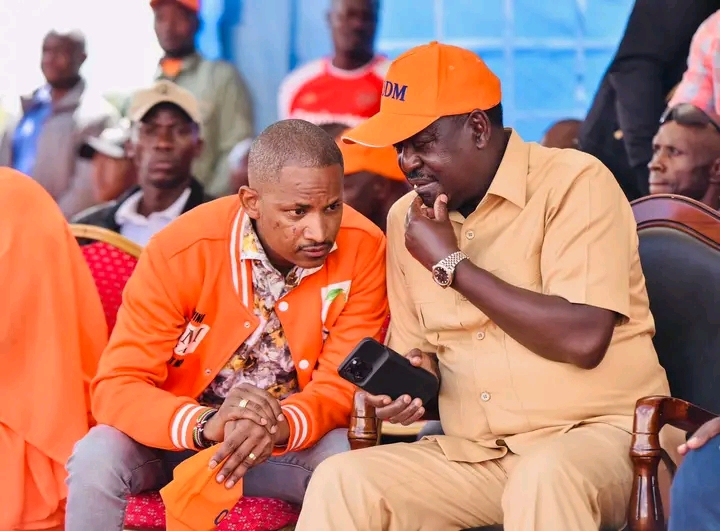
Raila Odinga is often spoken of as the greatest politician Kenya has ever produced — a man whose courage, resilience, and defiance shaped the country’s democratic journey. He has been detained, betrayed, worshipped, and even mythologized. His name sits at the center of Kenya’s political consciousness, a symbol of struggle itself. Yet to call him the greatest without context is to ignore a truth: Raila’s greatness was not born of genius alone. It was a product of his time — of a political ecosystem that no longer exists.
The Africa that produced Raila Odinga was in transition. From the 1950s to the early 2000s, most African countries were still experimenting with self-governance. Independence was fresh, constitutions were fragile, and democracy was being tested. Systems of government were young, porous, and uncertain. They were easy to question, easy to bend, and easy to challenge because they were still being built.
It was a fertile environment for defiance. Anyone with conviction could confront the state and command national attention. The path to prominence was clear: speak against the regime, organize protests, endure detention, and you would be baptized by fire into political immortality. Raila walked that path with unmatched audacity. His name became synonymous with resistance because, in his time, resistance itself was the highest political virtue.
But that era has passed. The world has changed, and Kenya with it. The systems that once trembled before protest have become structured, regulated, and self-protecting. Politics is no longer a chaotic street theater of passion and chants; it is a network of institutions, bureaucracy, and digital oversight. It is far harder today to rise purely through rebellion because the system no longer reacts with the same brutality that once made martyrs of activists.
This is where the comparison between Raila and Babu Owino collapses. Babu, like many in his generation, imagines that greatness can be achieved by mimicking the defiance of his predecessors. He mistakes volume for vision, aggression for courage. But his struggle lacks historical necessity. He lives in an era where political agitation, without innovation, feels like performance — loud but hollow. Babu’s acts may give him visibility, but they cannot give him greatness.
In Raila’s time, defiance was a language of liberation. In Babu’s, it is just another accent in a noisy democracy. Today’s politician cannot simply fight the government; they must understand it. They must reform it from within, not through riots but through ideas. The modern battlefield is intellectual, not physical. Greatness now lies in policy, in vision, in building lasting systems — not in being the loudest voice in Parliament or the most dramatic on the streets.
The difficulty of achieving greatness today is not unique to politics. The same dynamic plays out in education, sports, and art. There was a time when education itself made one extraordinary. In the early 1900s, being literate was enough to command respect and leadership. Universities were rare, degrees were golden tickets, and intellectuals were revered. Today, education is everywhere. Everyone has been to school; everyone has a certificate. Knowledge alone is no longer a badge of distinction.
Sports tell the same story. The first generation of footballers — Pelé, Maradona, and even our local legends — achieved greatness because they were pioneers. They were doing something the world had never seen before. Their stories were romantic because they defined the limits of human ability. But now, in an age where every skill has been perfected and every record can be broken by science, greatness requires reinvention, not imitation.
Raila’s greatness, therefore, was not just in what he did but when he did it. He was a man of the right temperament in a time that rewarded confrontation. His fire matched the political conditions of his era. He spoke rebellion when rebellion was needed. But today’s conditions require a different kind of fire — one that burns quietly through vision, strategy, and innovation.
Babu Owino may have energy, eloquence, and intelligence. He has mastered social media and commands attention among the youth. But he is trapped in the shadow of a man who fought a different war. His rhetoric of revolution floats in an atmosphere that no longer breathes revolution. The struggles of this generation are not against dictatorship but against poverty, unemployment, corruption, and systemic inefficiency — enemies that cannot be defeated by slogans.
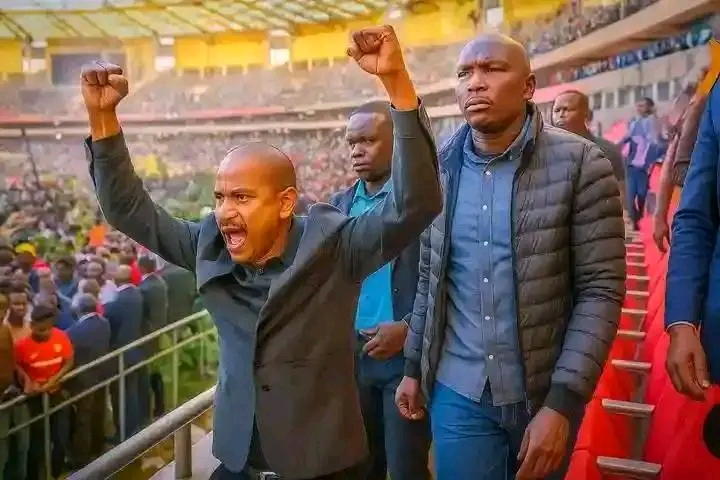
“Babu’s acts may give him visibility, but they cannot give him greatness.”
Political greatness is not transferable. It cannot be inherited like a family name or copied like a campaign slogan. Every generation must define its own version of heroism. Raila’s generation fought to create democracy; this one must fight to perfect it. And that demands less shouting and more thinking.
So no, Babu Owino can never be Raila Odinga. Not because he lacks courage, but because the age that made Raila possible no longer exists. The soil that grew him has hardened. The institutions that once bowed to protest now absorb it. The people who once followed chants now demand results. Raila was a product of chaos. Today’s politician must be a product of competence.
Many of our young leaders are still chasing ghosts, believing that greatness is born in confrontation. But the future will not belong to those who fight the old battles; it will belong to those who design new systems. The next great Kenyan politician will not be another Raila. He or she will be someone who dares to move beyond Raila — someone who understands that history does not repeat itself; it evolves.
This article was prepared by the Ramsey Focus Analysis Desk, drawing from verified reports and independent research to ensure accuracy and context in Kenyan current affairs.